


3 min read

The Summer CO₂ Squeeze: Why CO₂ Storage Matters More Than Ever

The Summer CO₂ Squeeze: Why CO₂ Storage Matters More Than Ever

Summer Demand puts Pressure on the CO2 Supply Chain
Every summer, soda producers, breweries, food processors, and beverage distributors
prepare for peak demand. At the same time, the U.S. carbon dioxide (CO) supply chain enters one of its most challenging periods of the year.

Most people don’t realize that food and beverage-grade CO₂ doesn’t come directly from the ground or from industrial plants ready for use. Instead, much of the nation’s CO₂ is recovered as a byproduct of ethanol production, ammonia manufacturing, hydrogen production, natural gas processing, and naturally occurring underground CO₂ reservoirs. Before it can be used in food and beverage applications, the raw CO₂ must be captured, purified, scrubbed, dried, liquefied, and tested to meet strict food-grade quality standards.

Once processed, liquid CO₂ enters a nationwide distribution network that supplies breweries, soft drink manufacturers, food processors, meat packing facilities, restaurants, and countless industrial operations. It’s an efficient system, but one that becomes increasingly vulnerable during the summer months.

Each spring and early summer, many production facilities, particularly ammonia plants, schedule planned maintenance shutdowns that temporarily reduce CO₂ output. At the same time, demand rises as beverage consumption increases, dry ice production expands, and food manufacturers ramp up seasonal production. Unexpected disruptions at purification facilities or major CO₂ production sites can tighten the market even further, creating the supply shortages our industry has experienced in recent years.

Storage Is the Key to Supply Resilience
When these shortages occur, the conversation often centers on production. In reality, one of the biggest opportunities to improve reliability lies in storage and distribution infrastructure. Facilities operating with properly sized CO₂ bulk storage tanks are far better equipped to manage supply interruptions than those relying on minimal on-site inventory. Additional storage capacity provides operational flexibility, allowing businesses to continue production while deliveries are delayed or supply becomes constrained.

Auxiliary backup storage systems add another layer of protection by increasing reserve capacity during periods of high demand or supply uncertainty. Instead of reacting to shortages, companies with well-designed storage systems are able to maintain operations while others are waiting for the next delivery.

Temporary mobile storage units, commonly referred to throughout the industry as CO₂ Queens, have become an invaluable solution during seasonal shortages, planned maintenance, emergency outages, and facility expansions. These portable liquid CO₂ storage systems can be deployed quickly to provide temporary storage capacity, helping customers avoid costly downtime without the need for permanent infrastructure.

Building Stronger CO2 Infrastructure
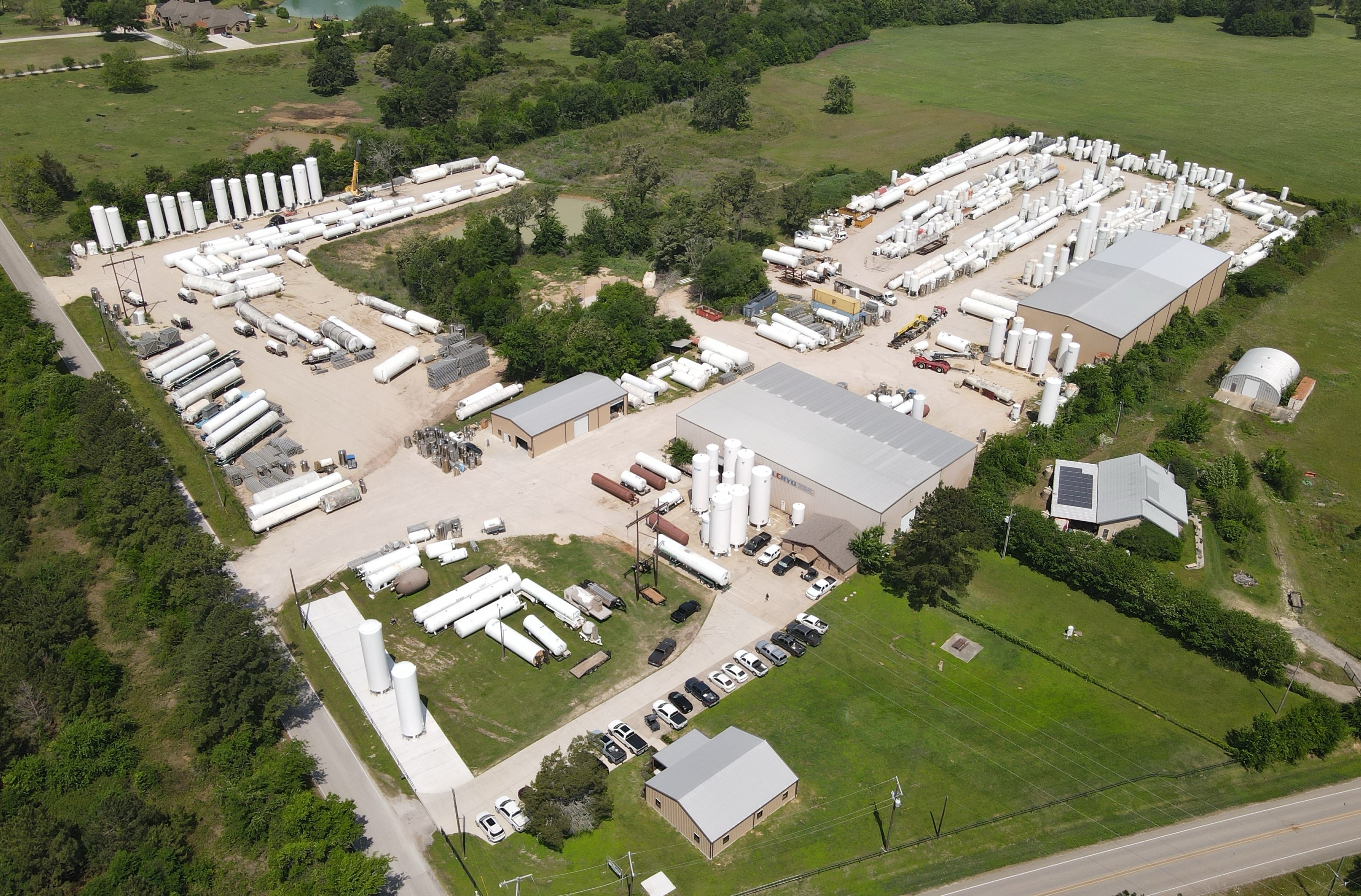
At CTR Cryo, we understand that dependable CO₂ infrastructure extends well beyond the storage vessel itself. Our expertise includes the engineering, fabrication, service, and repair of CO₂ bulk tanks, auxiliary storage systems, CO₂ Queens, vaporizers, cryogenic pumps, transfer skids, and the equipment that safely moves liquid CO₂ from delivery through final use. For distributors operating high-pressure cylinder filling facilities, CTR Cryo also manufactures and supports complete Cardox Cylinder Filling Units (CFUs), pumps, and replacement parts. These systems play a critical role in filling high-pressure CO₂ cylinders for beverage service, fire suppression, industrial gas, and other specialized applications. While the CFU is an important part of the supply chain, it represents one component of the broader CO₂ infrastructure that begins with dependable bulk storage and reliable liquid handling equipment.

Seasonal CO₂ shortages are likely to remain a reality as demand continues to grow and production schedules fluctuate. While no one can control the market, companies can control how well they prepare for it. Investing in reliable bulk storage, auxiliary backup systems, temporary CO₂ Queen solutions, and well-maintained transfer equipment provides the resilience needed to keep operations running, even when the supply chain is under pressure.

At the end of the day, the companies that weather the summer CO₂ squeeze most successfully aren’t necessarily the ones with the greatest supply. They’re the ones with the strongest infrastructure.

Frequently Asked Questions

Why do CO₂ shortages happen during the summer?

Summer demand increases while many production facilities perform planned maintenance, reducing available supply and tightening the distribution network.

Where does food-grade CO₂ come from?

Food-grade CO₂ is commonly recovered from ethanol production, ammonia manufacturing, hydrogen production, natural gas processing, and naturally occurring underground CO₂ reservoirs before being purified and liquefied.

How does additional CO₂ storage improve reliability?

Additional storage provides greater on-site inventory, helping facilities continue operating during delivery delays or temporary supply disruptions.

What is a CO₂ Queen?

A CO₂ Queen is a portable liquid CO₂ storage unit that provides temporary storage capacity during maintenance, outages, seasonal demand, or facility expansions.

Can existing CO₂ storage systems be expanded?

Yes. Many facilities improve resilience by adding auxiliary storage or upgrading related CO₂ handling equipment.

What equipment is included in a complete CO₂ infrastructure system?

Systems may include bulk tanks, auxiliary storage, CO₂ Queens, vaporizers, cryogenic pumps, transfer skids, Cardox Cylinder Filling Units, and associated equipment.


Default image alt text
1 An optional caption for the image that will be added to the gallery. Enter any descriptive text for this image that you would like visitors to be able to read.
Default image alt text
2 An optional caption for the image that will be added to the gallery. Enter any descriptive text for this image that you would like visitors to be able to read.
Default image alt text
3 An optional caption for the image that will be added to the gallery. Enter any descriptive text for this image that you would like visitors to be able to read.
Default image alt text
4 An optional caption for the image that will be added to the gallery. Enter any descriptive text for this image that you would like visitors to be able to read.
Default image alt text
5 An optional caption for the image that will be added to the gallery. Enter any descriptive text for this image that you would like visitors to be able to read.
CTR Acquires Allcryo: Expanding Our Cryogenic and CO₂ Service Capabilities Across Texas and the Western U.S.

CTR Acquires Allcryo: Expanding Our Cryogenic and CO₂ Service Capabilities Across Texas and the Western U.S.

We are proud to announce that Cryogenic Technology Resources (CTR), a TransTech Group platform company, has acquired Allcryo Allcyro is a ...
Read More
Safety First: CTR Cryo's Ongoing Commitment to Employees

Safety First: CTR Cryo's Ongoing Commitment to Employees

Growing Stronger Through Safety Since November 2025, CTR Cryo has continued to strengthen its commitment to workplace safety, building on an...

Read More
Continuous Improvement Spotlight: Investing in Continuous Improvement at CTR Cryo

Continuous Improvement Spotlight: Investing in Continuous Improvement at CTR Cryo

Developing Continuous Improvement at CTR Continuous Improvement starts with investing in people. As part of TransTech Group's commitment to...

Read More